
Executive Resumes, Personal Branding & Executive Job Search

Use This Simple Brain Technique to Get Your Next Job

Posted by Tyrone Norwood

Feb 10, 2015, 8:58:20 AM

image-olympic-rings

This may seem like a blog post title that seriously overreaches. But, there is a sense in which there is one simple, essential ingredient to job search success. This is it:

Visualize your goal.

It's not enough just to have a goal, although that appears to be critical for success in job search as in just about everything else. It's also important to paint a picture in your mind of what your goal would look like, feel like, sound like, etc. Brain science suggests that the brain is stimulated in the same regions whether we are only visualizing or actually experiencing a state of affairs.

Srinivasan S. Pillay, M.D. is a master executive coach to Fortune 500 leaders who examines new findings in brain science and makes suggestions for business behavior in his book: Your Brain and Business: The Neuroscience of Great Leaders.

If you want to explore his ideas in depth, Dr. Pillay discusses a range of compelling ideas to emerge out of brain research that have the potential to enhance leadership success.

But for those of us who aren't F500 executives, goal visualization holds great promise as well. The US Olympic Committee has increased the number of psychologists on staff 600% over the past 20 years in recognition of the importance of training athletes mentally to achieve their goal. Read more at Business Insider.

For years I've been coaching clients on how to interview to get the job. One key ingredient in my coaching is to encourage clients to visualize before the interview starts that they are already in the job and functioning with authority as part of a productive team. In visualizing these states of affairs, they are feeling confident, "in their element," collegial, knowledgeable, valued and have a sense of belonging and of liking their colleagues. The impact of this kind of visualization on a client's body language, energy, attitude towards the interviewers, and general affect can be profound.

People promoting visualization as a success tool suggest that by visualizing the goal the person is actually preparing the brain to understand and proceed on the steps that need to be taken to reach the goal.

In job search, the individual can visualize the ultimate goal - being an employee at their company of choice - and also visualize performing the steps required to meet that goal: connecting with people from the company or recruiters on LinkedIn, leaving a message for a hiring authority, meeting with key networking contacts, writing two letters a day to specific hiring authorities at specfic companies, etc.

The time required to do this kind of visualization daily is not more than a minute. See if it works for you in helping you get the job you want!


Jean Cummings


more

Topics: job search, interviewing, career management, career planning

Mayor Menino's Little House: Musings on Money and Career

Posted by Tyrone Norwood

Nov 10, 2014, 11:34:35 AM

Image-Menino-home

Mayor Menino in front of his home in Hyde Park section of Boston

Boston and Masschusetts were honoring the life of Mayor Tom Menino last week. It is said that he had met 60% of Boston's residents and had a hand in every building project in the city over his 20-year tenure and 5 terms. He was much loved - a man of the people - who loved his city and its people. His accomplishments were many.

One item struck me as the remembrances rolled in on the radio and - though slightly off-topic from what I usually write about here - I wanted to put it out there. It was that he continued to live in his modest house in the city neighborhood he started out in. We are used to seeing big names and their big homes. What does it mean that Mayor Menino did it differently?

These are musings on money and career - on money and values - on money and freedom - on money and retirement. In no particular order, these are thoughts that are prompted, in part, from having worked with so many people over the years at different stages in their careers experiencing those twin concerns of almost everybody: how to make enough money (whatever "enough" means for the individual) and how to be happy.

1. Why is it surprising that a prominant public figure like Tom Menino never felt the need to upgrade his house to match his increasing levels of influence, power, and compensation? Is it necessary to spend and own in keeping with one's level of career advancement? What does it mean when someone steps out of this lock-step advance?

2. What can we infer about Mayor Menino's value system? We can guess that he valued his feeling of home and neighborhood and that he didn't care about house pride and wealth demonstrations.

3. What kind of freedom does owning less in terms of possessions confer upon a person or a family? Is it worth giving up the possible benefits of more comfort, beauty, space, and status in one's property for the ability to live on less and then be able to choose a lower-paying job, if it provides more life satisfaction?

4. When we see celebrities like Mayor Menino and Warrren Buffett - both top practitioners in their respective fields - decline to purchase showy properties, what does it make us feel? It makes me feel that their work is something they do because they were born to do it - they love it and it allows them to be perfectly who they are. And it is not necessary linked to a need for impressive property ownership.

5. As so many baby boomers approach or select retirement, what do the issues of spending and lifestyle during the working years have to do with retirement lifestyle? I expect we will see many creative solutions where, because financial constraints will be the norm, people will develop innovative solutions for housing as well as for how to make those years fun and meaningful. Feeling free to step out of the realm of competition in housing/possessions will become key to retirement "success" for many I would guess.

6. Here is a common pattern I see in my increasingly wealthy town, understanding that this scenario is only avalable to the top few percent. People trade up houses 2 or 3 times to get bigger. more beautiful, or high-status homes. Why did Mayor Menino do it differently?

7. A final thought: since we leave this world with nothing, what part, then, do we want things and money to play in our careers and lifesyles during our brief span of life?

Best wishes for prosperity on your terms. I'd love to hear your thoughts. And thanks, Tom Menino, for your amazing contributions and for prompting these musings!


more

Topics: career management, career planning, career services, careers in retirement

Gallup Reports 70% US Workers Unengaged - Enter: Personal Branding

Posted by Tyrone Norwood

Jun 26, 2013, 11:58:00 AM

 personal brandingCourtesy Gallup

Gallup's 2013 State of the American Workplace Report came out a few days ago and finds that between 1010 and 2012 only 30% of workers report being actively engaged at work, 50% are unengaged, and 20% are actively disengaged (working against the company's interest). The report estimates that this high number of unengaged workers costs the US up to $550B annually. These losses result from absenteeism, health and safety issues, quality defects, and lost productivity.

There are a number of interesting findings in the report. But I am interested today in the recommendations for addressing the problem

Gallup identifies three main ways for companies to increase employee engagement. I'd like to focus on just the second, because it is so key to people's careers and transitions, my particular areas of interest:

"The research shows that people who use their strengths every day are six times more likely to be engaged on the job."

We can fairly say, then, that if we increase employee engagement by 60%, we've gotten a lot closer to the desired fully engaged workforce. That's a huge impact! Even though Gallup employs "strengths-based" terminology, many of us this see the concept as very close to what we now call "personal branding." 

So what are the Gallup Report recommendations to improve engagement?

They advise that employers and managers actively help their employees to discover and use their strengths, as distinguished from their weaknesses. The idea is to identify what workers are doing and what skills they are employing when they are being the most productive (and fully engaged). Then they need to make sure to assign them the kinds of tasks that require those skills.

In personal branding, we identify a person's "unique promise of value." This is a concept formulated by William Arruda. It includes what a person does best (talents), skills, his/her attributes, unique knowledge base, the value s/he delivers consistently, personal style, and similar factors.

Gallup found that when teams focused on team members' strengths, productivity goes up 12.5% and translates into increased revenues and profitability.

Whether managers and staff choose to use Gallup's strengths-based tools, branding processes such as Reach Personal Branding, or any other related instrument, they have the power to improve lives and businesses to a remarkable degree, according to the findings.

What can you do today to discover your strengths or remind yourself of them, if you already know them? If you manage others, what can you do today to ensure that your staff are using their individual strengths? If you are managed, how can you influence your manager to make use of your unique constellation of skills, attributes, and talents?

more

Topics: personal branding, career management, personal brands, branded executive resume

Tech Job Search: "Software is Eating the World" - and Your Job?

Posted by Tyrone Norwood

Jun 3, 2013, 8:11:00 AM

Tech job search: impact of cloud computing
Quoting Teshma Sohoni (Fast Company Ap 2013), "Software is indeed eating the world as...industries are adopting SaaS/cloud faster than ever." He goes on to state that startups are targeting both niche and large industries with custom solutions.

For tech job seekers, whenever there's a disruptive trend, new types of jobs will never be far behind. These startups, in addition to established service providers, will be expanding their services and markets and in need of skilled tech workers. However, there's been a perceived downside for technology professionals in the trend to SaaS/cloud:

"What will happen to my job when my IT Dept. increasingly oursources both applications and infrastructure that have traditionally been under the control of the internal IT shop?"

Contrary to the fears that SaaS/cloud would decimate IT departments, it appears that tech jobs are still around but rapidly adapting and changing to service the new landscape. How will this trend affect you in your job search and career? Forbes addresses this question in their article, "The Great Cloud-induced Job Implosion That Never Happened," in reference to the Deloitte study published in the Wall Street Journal:

"If anything, cloud computing is increasing complexity and workloads, creating more demand for IT skills."

But the skills needed for current and future IT jobs will need to be actively cultivated in order for IT professionals to stay relevant. Oddly enough, we're not talking about mastery of new languages or technologies here as much as learning to interface effectively with internal business customers, vendor staff, and external customers.

In addition, new types of competencies are growing in importance:

"Deloitte reports that rather than diminish in-house IT departments, it is generating more “value-added” activities such as 'high-end software development, business analytics, enterprise architecture, and strategic vendor relationship management.'"

We have discussed in this space before how IT professionals are increasingly expected to be business savvy. The sought-after hires will be those who are attuned to leveraging IT to add value to the business.


Specifically, in three companies, here are examples of how certain jobs are morphing:

Programmers/coders to.....Application Developers, Technical Analysts

IT Staff to.....Business Analyst, Architects

IT Staff who maintained/fixed apps to.....Teachers/mentors/trainers supporting end-users in the use of new cloud/SaaS services

Where do you see possibilities for your career in these changes? I'd love to hear!


more

Topics: career management, career planning, executive job search, branded executive resume, career marketing, SaaS jobs, Cloud jobs

"Transferable Skills" Fallacy: When is too late to change industries?

Posted by Tyrone Norwood

Aug 29, 2012, 7:53:00 AM


Executive at a crossroads

Executive at a crossroads

Let’s call him Jesse. His story is a hypothetical example, but one that is not uncommon. Jesse has done all kinds of great things. Wonderful quantifiable achievements. And in several industries – IT, Manufacturing, Consulting. Clearly, he’s loaded with talent.

So, he’s 45 or thereabouts. And he wants to apply at the VP level for positions that might come up in any of those fields. The trouble is, is it too late for that?

When is he deemed to be too far along in his career (code for too old) to capture a senior management position in any of those fields?

Talk of  “ transferable skills” is everywhere in media stories about job search. This idea is offered as a panacea for how to get a job in a different field than the one you're experienced in.

Don’t get me wrong! I’m a believer that many people could successfully cross industries and even be more effective because they are deeply familiar with more than one sector.

But that’s the truth from the individual’s point of view.

The truth is the common faith in the transferable skills idea most likely isn’t going to hold any water from the perspective of the hiring authority or recruiter any more, at the executive level. And this is, in part, because the whole world of candidate selection has changed.

Before 2009 or so, the candidate pool was pretty much limited to the recruiter’s contacts, referrals, and perhaps people who had posted their resumes on a job board or corporate website.

But, since LinkedIn has become a premier database of professionals, recruiters now have access to profiles of both unemployed and employed executives. And I have heard recruiters in two panel discussions say that they are now able to hire candidates who possess 10 out of 10 of their requirements. The old, pre-LinkedIn number was 7 out of 10.

What this means for Jesse is clear. If the recruiter can find someone who has 25 years of experience in one industry, and probably is even more narrowly specialized in the desired industry niche, that person is going to be selected over the executive who has 7 years in 3 different industries.

So, if you are 35 and thinking about your next job, know that the industry where you land may well determine the industry you will reside in professionally for decades to come. It will simply be too difficult to switch industries at the more senior levels.

This is not to say that it’s impossible. If you are able to tap exceptionally strong, well-placed personal connections or if you are a well-known superstar you may be able to make such a move at 35 or even 45.

But I encourage my clients to commit to an industry as soon as they are able. Ideally 30, 35. If an executive is 45 and has split experience between 3 sectors, I encourage that individual to strengthen his presentation of his most recent experience and go after positions in that field. And this is the advice I would give to Jesse.

So the word to the wise today is: play the field if you want to in your twenties, but settle down in your 30s. Don’t count on your skills transferring to get you a job. Develop the core, desired skills that recruiters will be requiring. Keep your eye on your goal a couple years down the road and manage your career accordingly.

more

Topics: executive resumes, career management, career planning, executive job search, career brand, transferable skills, switching careers

Save Your Tech Career as Superstacks Take Center Stage

Posted by Tyrone Norwood

Jun 18, 2012, 10:58:00 AM

What superstacks (mobile devices+) mean for youYou already know that cloud computing is now and will continue to be impacting the tye of jobs technologists  and technology executives will have in the future. Another mega trend that will impact tech careers is rapidly becoming a strategic priority for companies: superstacks. The term is so new I couldn't find an image in Google images for it - just pictures of smokestacks!
Smart phones are the earliest manifestations of superstacks. Accenture's Mitch Cline predicts that vertically "stacked" solutions - operating systems + chips + devices + software + web interface + user services - are poised to become a top corporate strategy priority. Superstacks will be needed for new mobility and B.Y.O.D (bring your own device) solutions and are predicted to become increasingly prevalent in healthcare, consumer products, and retail applications.

The most immediate impact of the trend on your tech career is the anticipated surge in M&A activity: "More than three fourths (77 percent) of respondents believe an increase in M&A activity will occur over the next two-to-three years." Many of my clients come for branding, executives resumes, LinkedIn and social media profiles, and job search coaching because their company has recently been acquired and their division spun off, their job made redundant, or their unit simply eliminated as not a priority for the new corporate entity. Many have seen their compensation slashed as their work load has been increased.

There are great job opportunities in the new tech landscape, but you have to "trend-proof" your career insofar as you are able. To be ready for the rise of superstacks, you need to be proactive about the roles you might play in developing the new technologies and prepare yourself for M&A turbulence.

1. Superstacks trend: Aim your career towards where the jobs will be. Don't keep your head down. Read everything you can about superstacks and cloud computing. If you're a tech professional, can you morph your path in the direction you seeing technology going by gaining necessary new skills? If you're a technology leader, develop a vision for leveraging superstacks and cloud computing as transformational, value-added techologies. And then blog and tweet about it to demonstrate thought leadership.

2. Accompanying M&A activity: Protect your career by being ready AT ALL TIMES to start a job search. That means to always have a current resume, a strong and distinctive brand, and powerful online networking connections on LinkedIn and also Twitter and FB, if you want to. Keep your offline network thriving through frequent friendly contact as well. Continue to build your online reputation as well by multiplying the number of quality sites where your name will appear in a Google search and by blogging, tweeting, or commenting on other people's material.

3. And stay tuned: I'll continue to keep you up-to-speed in terms of trends that will be impacting your tech career. The race is to the swift and the market-savvy.


more

Topics: job search, executive resume writing, career management, technology career, technology careers

Got Passion? Surprising Work & Interviewing Tip

Posted by Tyrone Norwood

Apr 30, 2012, 3:24:00 PM

Image Passion Enthusiasm Credit to Kim Garst for image

I encountered the phrase “all in” in two quite different contexts lately. In the first, a minister used it to describe his faith. In the second, a technology sales executive said it about the way he works. And then in a third instance, Ralph Waldo Emerson (a voice from the past), is quoted using different words but talking about the same idea (thanks to Angel Maiers for her post and the Emerson quote:

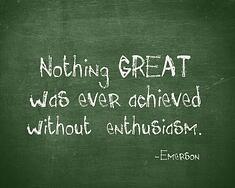
"Passion is one of the most powerful engines of success. When you do a thing, do it with all your might. Put your whole soul into it. Stamp it with your own personality. Be active, be energetic and faithful, and you will accomplish your object. Nothing great was ever achieved without passion.”

Put this together with a research finding that most of new hires that fail do so because of attitude, not lack of skills – as much as 80%.

And add in the “personal” in personal branding, which is about your passions, values, and goals. In other words, the things that go to make up your personality.

And you’ve got a little-known but apparently crucial ingredient in on-the-job success.

The Passion thing helps in interviewing too. If you know what you’re passionate about, great! Don’t be afraid to show the energy and excitement you experience in what you do. Even if the intervivewer hasn’t thought about passion as a desirable quality in a new hire, you will radiate energy and enthusiasm and that will engage the interviewer’s interest.

Studies have also shown that there is a kind of mimicry that goes on when two people communicate – that is, your enthusiasm will ignite the interviewer's. And that’s got to help!

Surveys find that by far the biggest element in deciding whether to hire someone is based on how s/he looks and sounds. Both your facial expression and your voice change when expressing passion, and, therefore, you will look and sound even better than you ordinarily do (we hope). :)

If you’re not passionate about your work, here are some thoughts. Passion doesn’t have to be fireworks kind of passion. It can be a firmly grounded commitment. If neither of those is true, see if you can find one aspect of your job that particularly interests you. Ask yourself why. Then ask yourself how your heightened interest impacts outcomes. Then, you can take advantage of the magic of passion, at least in the part of the interview where you give an example from the interesting part of your work.

As the hiring process is increasingly using assessments and simulations in an attempt to be more objective, your passion need not lose its power completely. It may be the single differentiating factor between two otherwise similar candidates. It may, in fact, be the one that will put you over the top!


more

Topics: job search, interviewing, interview style, career management, Get a Job, career brand

20 Insider Job Search Tips from Recruiters: Ignore at Your Peril

Posted by Tyrone Norwood

Apr 24, 2012, 9:46:00 AM

Executive recruiter tips

Have you caught up yet? I am amazed that there are CIOs of big companies out there who don't have a built-out LinkedIn profile - just name, photo, and employers. At a recruiter round table a couple of weeks ago, sponsored by the New England Network of the Association of Career Professionals International, the new picture of recruiting emerged. Successful job seekers will proactively be where recruiters are looking for talent. Here is some of what these three recruiters said and tips for being a successful candidate:

1. They want to find you in a Google search. Have profiles on Linkedin (LI), Twitter, Facebook, ZoomInfo, About.me, at a minimum.

2. They will look for you on LinkedIn. Be there - both with a profile and membership in relevant industry groups.

3. They want you to have a 100% complete LI profile. Also, get an edge by adding video, audio, PowerPoint presentations, etc. using apps available at the bottom of your profile.

4. They will look to see who your connections are and if there are any that work for their company. Then they will go through that employee to talk to you, if interested. Expand your LI network continually.

5. They will see what you are doing on Twitter and Facebook. Curate your content with an eye to your professional image.

6. Many recruiters no longer pay Monster and CareerBuilder, because they can source great candidates through Google searches, LI and social networking sites. So spend your time there.

7. They still do find some candidates on indeed.com, a job posting aggregator. So put your resume up.

8. They try to hire from within and develop employees, if they can. Have you explored that possibility where you work?

9. They rely on employee referrals for good candidates. So the more networked you are, the more likely it is that you will be known by someone in the company. Work towards 500 connections on LI. Expand your Twitter following.

10. They want you to have 10 out of 10 of the skills they are looking for. Build towards those as you manage your career.

11. One of the recruiters said she doesn't look at unemployed candidates. The other two said they certainly will. They understood that the recession was an equal-opportunity layoff machine. If you have a period out of work, fill the time with meaningful volunteer work or consulting.

12. They want change leaders. What change have you managed, how did you do it, what were the results? Get this info into your resume, LI profile and other marketing communications.

13. They're moving towards video interviews. Have someone go through some interview questions with you while filming you on their smart phone. What can you learn about the general impression you give, your tone of voice and body language, your manner? Try to be energetic and engaging, with short pithy messages and stories.

14. They are using assessment centers, competency models, job simulations, 360s, and self-assessments to help determine who is the best candidate. No longer can people get hired on "a wing and a prayer." Take your career seriously and develop the critical skills your target job requires.

15. Jobs are still hard to get. Companies are not replacing some of the employees who leave. They are expecting more work out of those who remain (the jobless recovery). Be hard to replace at the job you're in.

16. Bright Horizons (childcare & other) hired 200 people out of 10K applicants. Get an edge in whatever way you can (see above). Also, be ready with a well-defined career/personal brand, a portfolio of marketing communications, a video, a robust online presence, and a valuable network.

17. They are catering to people active on LI, Twitter, and Facebook. Be there.

18. The workforce is becoming increasingly globalized. Expand your perceptions.

19. They are relying heavily on Web analytics and ATS (Applicant Tracking System) reporting. Submit a quality ASCII/text version of your resume, along with the Word version, if requested, to avoid transmission problems.

20. They want new employees to "hit the ground running." That means you need to demonstrate that you already have the skills required to start up fast.

Does this list seem overwhelming? It is, but it's the future. As you can see, even top IT leaders aren't always up-to-speed. But if you take these suggestions to heart, you will have an edge in job search now and throughout your career.

more

Topics: career management, executive recruiters, executive job search, Get a Job, applicant tracking software

Programmers & IT Support Staff: SaaS & Your Job

Posted by Tyrone Norwood

Apr 20, 2012, 5:23:00 PM

SaaS & Your IT Job

As a follow-on to my last post on the impact of cloud computing on the IT jobs landscape, here are a list of jobs predicted to emerge as one aspect of the cloud - software-as-a-service or SaaS - becomes even more widely adopted. If you work currently as a traditional software programmer or support back-end systems under the leadership of a CIO, take note of the opportunities emerging as discussed in CIO Magazine's article on: "What SaaS Means for the Future of the IT Department."

Programmers: Less demand for software programming and more for Web 2.0 and Java skills along with knowledge of open Web standards, as the trend toward Web-mediated application delivery and mobile computing accelerates.

For the large numbers of IT support staff out there, who primarily keep ERP systems running, support the infrastructure and the back end, you may no longer be working for the company you're with. The jobs will be at the SaaS vendors: roles integrating different SaaS solutions for a customer or working in the data center.

Large-scale adoption of ERP delivered as SaaS may be slow, however, due to the complexity of the inter-relationships between applications. Single application SaaS is booming though, and here is a recommendation as mentioned in CIO Magazine's article worth serious consideration:

"The SaaS trend will force many IT professionals to rethink their skills and the value they bring to their companies, says Jeffrey Kaplan, president of THINKstrategies, a consultancy that helps companies adopt SaaS applications."

Translated, what this means is that you need to build your career brand around the skills in current demand and your unique value proposition. I never write an IT resume that doesn't showcase my client's value prop  - and you shouldn't either. For more on branding, click here.


more

Topics: IT job search, career management, career planning, career services, cloud technology

Cloud Technology & Your IT Job: 5 Career Planning Tips

Posted by Tyrone Norwood

Apr 17, 2012, 9:33:00 AM

Cloud computing & your IT job

Trying to predict the future of IT jobs is...shall we say, like trying to predict the stock market - and we all know how that worked in '07!. But, even taking into account that "the only certainty is change," the general shape of tech landscape now gives us ideas about good directions to move in.

The newest factor on the scene impacting the size and shape of the IT workforce is cloud computing. Depending on whom you listen to, the job picture is either bad, good, or neutral. Brandon Butler in CIO Magazine quotes an authority who says that IT jobs will be lost, another that there will be more IT jobs, and finally concludes:

"What is expected is that traditional IT roles of managing software and hardware will no longer be needed in the new cloud-heavy world."

I think that is a statement you can bank on with certainty. Naturally, as the traditional roles of the IT workforce become increasingly automated and mediated through the cloud, they will become obsolete. And new IT roles will inevitably crop up in other areas, such as helping clients integrate with the company's platform. And jobs will grow with cloud vendors.

As a job search coach who works exclusively with IT managers and executives, I wrestle with how to advise my clients, given the uncertainty in the job picture (nothing new here). Here are some of the perspectives I've come up with:

1. You cannot afford to keep your head down and just work. You've got to be heads-up and constantly assessing the technology direction your company (and the market) is heading and whether your job will be part of it going forward. That also means reading industry blogs, following LinkedIn groups, and following IT thought leaders on Twitter, as well as general news feeds.

2. If you see where the jobs are going, start evolving towards them - either re-train, volunteer with the team doing the transition to cloud technology, or work with a mentor who can help you make a transition. Cloud computing, business analytics, big data, security, mobile - all are areas to watch now.

3. Build your interpersonal, relationship, and communication skills. They will be increasingly important as IT folks interface more with other departments (product development) and with clients connecting through the cloud.

4. Build your project management skills. PMI's PMP certification - Project Management Professional - is one that is fairly reliable at this time in terms of giving you a valuable credential.

5. Enrich your brand by becoming an expert in one aspect of IT that will be relevant for the foreseeable future. At the same time that it is desirable to differentiate yourself as an irreplaceable specialist, don't jump in with both feet. Keep broad competencies that will enable you to move flexibly towards the next change coming.

It's no small task - preparing yourself and your career for constantly shifting tides. But if you can stay smart, alert, and agile while feeding off the energy, excitement, and opportunity that come with any profound new technology change, you may be able to ride the waves and land a great new job!

more

Topics: career management, cloud technology, IT job, IT jobs, IT career planning

What's new in high tech resumes, executive resumes, cover letters, job search, and personal branding for executives in technology.

Subscribe to Email Updates

New Call-to-Action

Recent Posts

Posts by Topic

see all

About the Author

Tyrone Norwood